20+ Years of Clinical Expertise, Re-engineered for Health-Tech
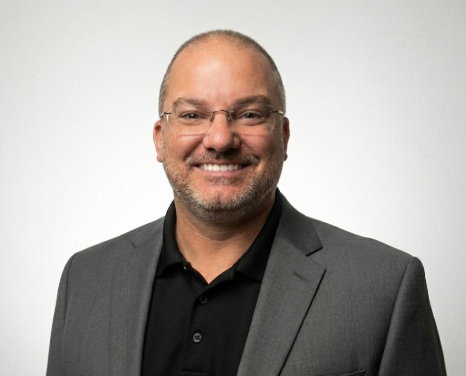
I'm a Doctor of Chiropractic with 20+ years of frontline clinical experience and a systems-and-technology mindset. I've lived the workflows, EHR friction, and documentation burden that health-tech products set out to solve, as a high-volume provider, an internal software power-user and the informal go-to for colleagues, and someone who independently prototyped a local ambient-AI charting workflow. In my own before-and-after testing, post-visit documentation dropped to roughly two minutes.
Most chiropractic practices are already paying for software with AI built into it. Most owners haven't stepped into it yet. Where I think I can be most useful is the conversation before the decision, sitting with a practice owner who hasn't committed to anything yet and helping them see what this could actually do in their practice. Then staying with it from that conversation through the day it's just how the practice runs. The case studies below show how I approach clinical workflows and technology.
Licensed in Virginia since 2002. I founded and ran my own practice for over a decade (2003 to 2016), and I completed Regent University's Level I Career Switcher coursework in 2018. Richmond Magazine named me a Top Doctor in 2020, 2021, and 2023.
Helping practice owners step up into what their software can already do for them.
Connect on LinkedInCore Tech & Clinical Capabilities
Clinical Workflow Optimization
Designing frictionless UI/UX triggers for clinicians, including push-button ambient capture, macro-based EHR templates, and relational databases for longitudinal patient tracking.
AI Data Mapping & Logic Validation
Designing prompt constraints and validating NLP output, mapping unstructured patient-doctor dialogue to structured documentation that supports the codes billed.
Regulatory & Operational Vetting
Bridging the gap between rapid software innovation and the strict, real-world constraints of HIPAA and revenue cycle management, using local processing specifically so patient data never leaves the machine.
Case Studies: Clinical Workflow & Technology
Case Study 1: The Ambient Capture Pilot
Turning Unstructured Room Audio into Structured, Review-Ready SOAP Notes
The Bottleneck: Chiropractors document in high-volume, fast-turn environments. In the practices where I worked, that meant 30+ patient visits a day with no resident or scribe, and an EHR that demanded structured, billable-grade notes for every encounter. The gap between what a clinician says in the room and what a compliant SOAP note requires is enormous. Raw dictation is verbose, non-linear, and rarely maps cleanly to the Subjective / Objective / Assessment / Plan structure that payers and auditors expect.
What I Did: I independently prototyped a local ambient-AI charting workflow using Whisper for transcription and Ollama to run a local large language model. I engineered a prompt constraint system using these open-source tools to bridge the gap. Rather than accepting free-form transcription, I designed structured input templates that guided the AI to extract and organize specific clinical data points (chief complaint, mechanism, pain quality, functional limitation, objective findings, diagnosis, and plan) into a standardized SOAP format with ICD-10 suggestions embedded at the output stage. The constraints weren't just formatting rules; they were clinical logic gates that prompted the model to flag missing information rather than generate it.
The Result: Documentation time per visit dropped significantly (in my own before-and-after testing across a small number of visits, post-visit documentation dropped to roughly two minutes). More importantly, the notes produced were structured: each section mapped directly to the clinical encounter, and the output was review-ready and required minimal editing. I believe the framework would transfer to other chiropractic or musculoskeletal practices.
Case Study 2: The Longitudinal Tracking Trigger
Eliminating Follow-Up Documentation Friction with Push-Button Workflows
The Bottleneck: Follow-up documentation in chiropractic care is repetitive by design: progress notes, re-examination triggers, and care plan updates recur on a predictable schedule. But in practice, they pile up, fall behind, or get written from memory at end-of-day. The result is notes that are late, vague, or disconnected from the visit they're documenting, creating audit exposure and billing delays.
What I Did: I configured a push-button workflow using ChiroSpring 360's existing macro and dialog tools. Each recurring note type (daily SOAP, progress exam, care plan update, re-examination) was mapped to a pre-structured macro that presented the clinician with decision-point dialogs, a single click per variable rather than free-text entry. The system was designed around how documentation actually happens in real time (mid-visit or immediately post-visit), not how it's supposed to happen in an ideal workflow.